


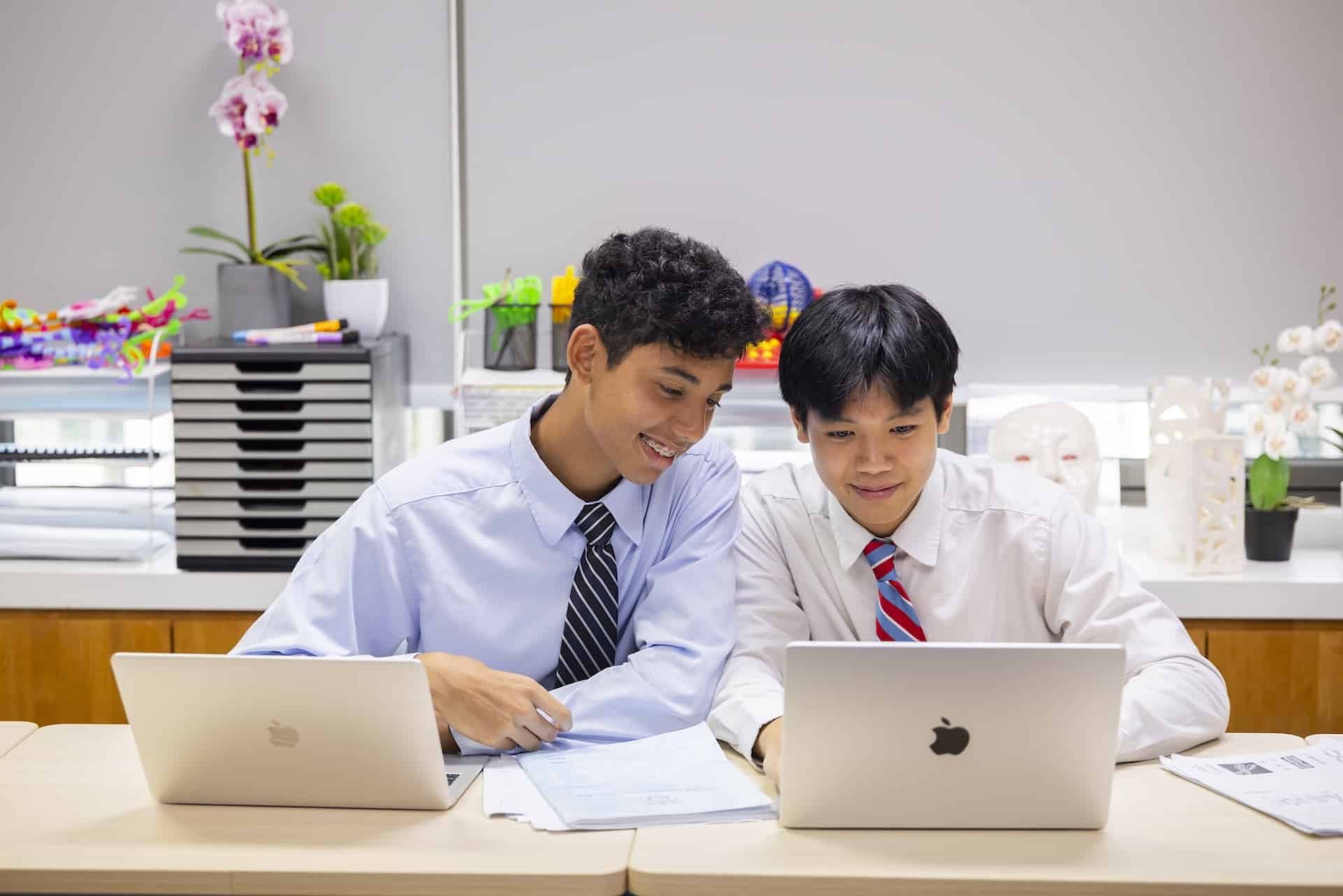


The College demonstrates and outstanding commitment to pupil welfare, with robust safeguarding systems, and a culture where the welfare and safety of pupils is visible across campus.

MCM Wellbeing: What and Why?
At Marlborough College Malaysia we are committed to the development of the whole student, in line with a philosophy based on the principles of Positive Psychology.
Pioneered by Martin Seligman at the University of Pennsylvania, Positive Psychology applied to education emphasises a focus on individual strengths and personal motivation as much as academics to promote learning and development.
Research has shown that character traits and well-being are dynamic and can be improved with good teaching and practice akin to building skills [1]. Additionally, there is now growing evidence that educating for well-being skills contributes to improved academic outcomes [2]. Character traits such as grit have been found to be just as important (if not more so) as IQ in academic performance [3] . Well-being in youth is also positively correlated with social and financial success later on in life [2].
Young people spend on average 30+ hours in school a week [2], and much more than this in a boarding school environment. This provides the ideal platform to help them develop holistically, gain knowledge and skills for life, and be prepared to contribute to society in positive and productive ways.


Our Model
With this foundation in Positive Psychology research, MCM embarked on its own journey in 2020 to develop a model for well-being that would be unique to our community. We spent one year exploring the strengths of our school and what we do best in order to design a model that is in line with our international values and unique positioning in Peninsular Malaysia. The result is the model below, which encompasses the health of four interconnected dimensions of body, mind, spirit, and community.
The model highlights that well-being is not one thing, but a series of interacting factors that lead to complete development and health of the whole person. The infinity loop shape of the model is an indicator that well-being is not a linear destination but rather a lifelong journey. Knowing this, we can have a realistic view and expectation for what is possible and to build the tools that will help our pupils flourish in and beyond school.
Teaching of Wellbeing at Marlborough College Malaysia
At Marlborough College Malaysia, our Wellbeing curriculum is designed to support the holistic development of our pupils from the Preparatory School through to the Senior School. We closely align to the UK framework for Personal, Social, Health, and Economic (PSHE) education to ensure a comprehensive and age-appropriate approach to pastoral care.

In the Preparatory School (EYFS to Year 8), the curriculum is structured around the PERMAH framework—Positive Emotion, Engagement, Relationships, Meaning, Accomplishment, and Health. Pupils explore essential themes including managing feelings, character strengths, digital literacy, and physical health. Lessons cover practical life skills such as navigating friendships, understanding hygiene, and learning about changing bodies, all while building the resilience needed for their transition to the Senior School.

As pupils move into the Senior School (Shell to Upper Sixth), the curriculum matures to address more complex topics. This includes navigating healthy relationships and consent, digital wellbeing and AI ethics, financial literacy, and drug education. The programme is designed to prepare pupils for the challenges of the modern world, covering everything from life-saving skills and mental health strategies to budgeting and preparing for the transition to university life.
Relationships and Sex Education (RSE) is taught in an age-appropriate manner throughout the College. We deliver this content with a deep awareness of and respect for the cultural sensitivities of our diverse pupil body, ensuring that all discussions are conducted with care and inclusivity.
We believe in a transparent partnership with our families regarding these important life skills. If any parent or guardian wishes to discuss the specific content of these lessons further or requests to remove their child from a particular element of the course, please contact the relevant member of staff. For pupils in the Senior School, please contact their Housemaster or Housemistress. In the Preparatory School, please contact the appropriate Head of Year.